



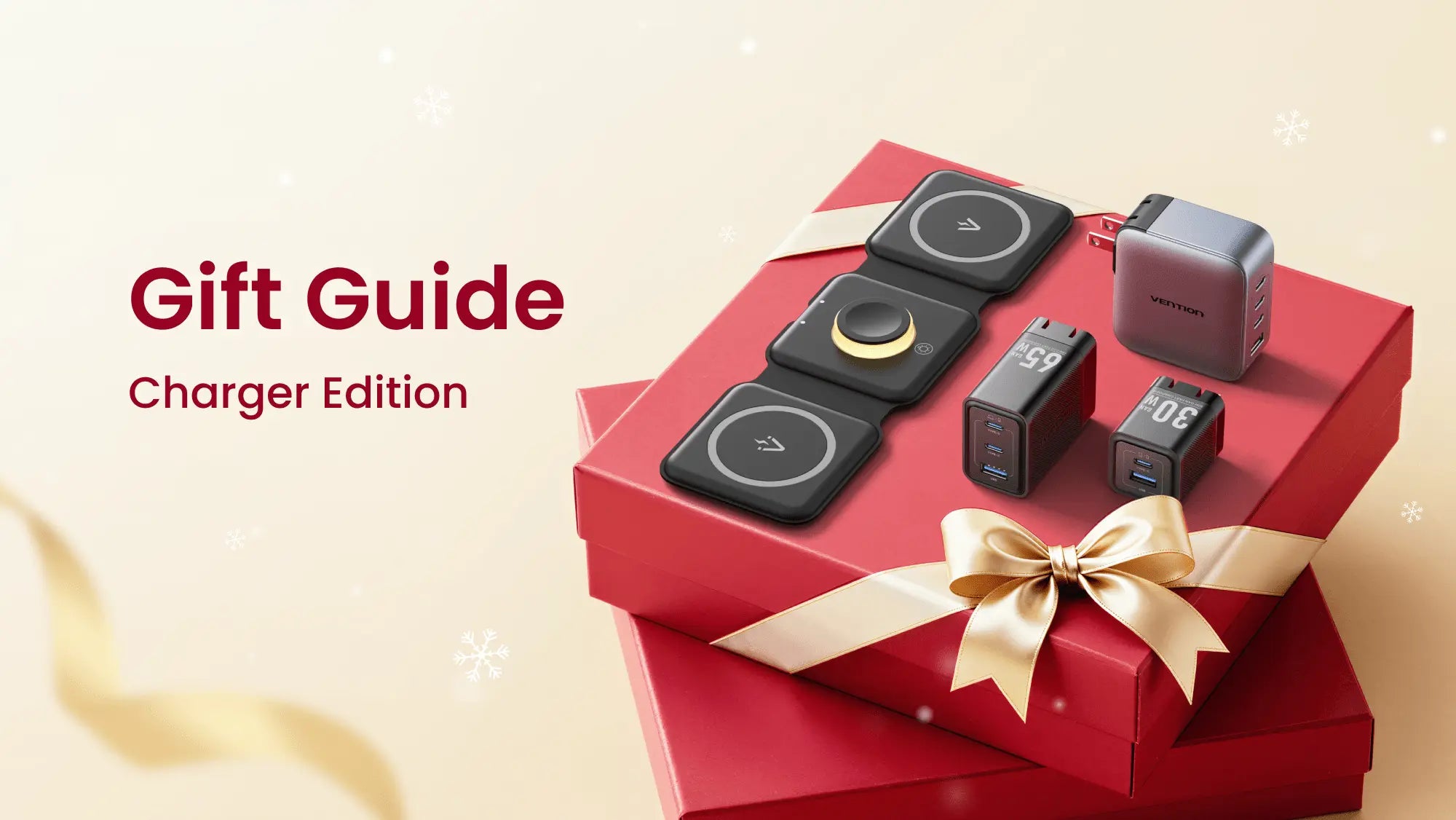
Comment choisir un chargeur pour en optimiser l'utilisation ? Cet article vous présente trois facteurs à prendre en compte, même si vous n'êtes pas un expert en technologie. Les voici : Alimentation, ports et protocoles de charge rapide.

Pouvoir
La puissance fait référence à la puissance maximale que peut fournir un chargeur. Plus la puissance est élevée, plus la charge de vos appareils sera rapide dans la plupart des cas. Imaginez un robinet : plus il est gros, plus il peut fournir d’eau en un laps de temps donné, et plus vite il remplira une bouteille.
Les pouvoirs suivants suffiraient au quotidien.
Téléphones
iPhones : généralement de 20 W à 30 W
Téléphones Android : La puissance varie en fonction du nombre de modèles de téléphones Android, mais une alimentation PD de 30 W serait un choix sûr.
Comprimés
Dans cette catégorie, vous aurez généralement besoin de modèles de 20 W à 45 W, car ils ont une plus grande capacité de batterie.
ordinateurs portables
Pour les ordinateurs portables légers, une puissance de 45 W à 65 W serait un excellent choix.
Pour les ordinateurs portables à forte consommation, une puissance de 90 W à 140 W, voire plus, suffirait à alimenter cet appareil gourmand en énergie.
Vêtements et accessoires
Si vous utilisez des montres connectées et des écouteurs Bluetooth, n'importe quel chargeur USB fera l'affaire car ils consomment moins d'énergie.
Types de ports
Vous trouverez peut-être des ports USB-A, USB-C ou les deux sur un chargeur. L'USB-C est devenu la norme grâce à sa taille réduite et son efficacité. Si vous achetez un chargeur compatible avec le câble que vous utilisez déjà, tenez compte de l'interface de ce dernier. Pour une compatibilité future, nous recommandons les chargeurs dotés de ports USB-A et USB-C.
Protocoles de charge rapide
Les protocoles de charge rapide sont les « langages » utilisés par le chargeur, le câble de charge et l'appareil pour communiquer. S'ils utilisent le même protocole (par exemple, la charge rapide 120 W), vous atteindrez cette vitesse. En cas de problème de compatibilité, la charge sera possible, mais plus lente.
PD (USB Power Delivery)
Parmi tous les protocoles, PD est aujourd'hui le plus universel. Abréviation de USB Power Delivery, il a été créé par l'organisation USB-IF. Par « universel », nous entendons qu'il est compatible avec la plupart des appareils, des iPhones, iPads et MacBooks à la plupart des appareils Android, en passant par les Switch et les ordinateurs portables. PD offre également une plage de puissance de 18 W à 240 W, ce qui contribue à sa compatibilité universelle.
QC (Charge rapide)
QC est une norme créée par Qualcomm (oui, le fabricant de puces). Elle était utilisée sur la plupart des appareils Android équipés de processeurs Qualcomm des générations précédentes. Elle est donc moins répandue que PD.
Autres protocoles
Les fabricants de smartphones ont également créé leurs propres protocoles de charge rapide pour recharger rapidement leurs appareils. On peut citer VOOC chez OPPO et OnePlus, HyperCharge chez Xiaomi et SuperCharge chez Huawei.
Si vous utilisez ces appareils spécifiques à une marque et que vous souhaitez bénéficier d'une charge rapide, le choix de chargeurs spécifiques à cette marque est évident.
Conclusion et aide-mémoire pour le choix d'un chargeur
Avant d'acheter un chargeur, nous vous suggérons de suivre les étapes suivantes.
- Étudiez la puissance d'entrée maximale de vos appareils afin de mieux comprendre leurs vitesses de charge rapide.
- Si vous utilisez plusieurs appareils, choisissez un chargeur dont la puissance de sortie correspond à la puissance d'entrée de votre appareil le plus gourmand en énergie, afin de bénéficier d'une compatibilité descendante.
- L'idéal serait que le chargeur possède plusieurs ports. Il peut s'agir d'une combinaison de ports USB-A et USB-C si vous utilisez encore des câbles dotés d'un port USB-A ; ou de ports USB-C uniquement pour répondre à vos besoins de charge futurs.
- En matière de protocoles de charge rapide, le PD est le plus universel car il est compatible avec la plupart des appareils du marché, qu'ils fonctionnent sous iOS ou Android.
Share:
Ce câble est incroyablement agréable, c'est un tout nouveau niveau ! Charge rapide 3A + Texture douce pour la peau
Comment choisir une banque d'alimentation ? 3 facteurs à considérer.